Hằng Thuận Ceremony: A Buddhist Wedding Tradition in Vietnam

In Vietnamese culture, marriage is a lifelong commitment between two people — a promise to walk through the years ahead with respect, compassion and, above all, responsibility.
Within Vietnamese Buddhist tradition, the Hằng Thuận ceremony gives that promise a quiet and spiritual expression. Held at a Buddhist temple before the Buddha and the monastic community, the ceremony becomes a gentle reminder of the vows a couple makes to one another: to understand, to respect, to care for each other, and to remain together through the changing seasons of life.
In essence, Hằng Thuận is a silent promise between two people, strengthened by their faith and witnessed in the presence of the Buddha.
The First Hằng Thuận Ceremony in Vietnam
The history of Hằng Thuận is closely connected with Từ Đàm Pagoda in Hue, an important centre of Vietnamese Buddhism.
In 1930, the Buddhist physician and lay practitioner Tâm Minh – Lê Đình Thám organised the wedding of his eldest daughter, Lê Thị Hoành, and Hoàng Văn Tâm at Từ Đàm Pagoda.
The ceremony is widely regarded as the first prominent Buddhist wedding ceremony held at a temple in Vietnam. It marked an important moment in the development of a wedding tradition in which Buddhist teachings and family life could meet within the sacred space of a pagoda.
In 1971, Venerable Thích Thiện Hòa formally gave this type of ceremony the name Hằng Thuận.
What Does Hằng Thuận Mean?
The word “Hằng” carries the meaning of constancy and continuity, while “Thuận” expresses harmony, accord and a willingness to live together in kindness.
Together, Hằng Thuận evokes the idea of a couple remaining harmonious throughout their married life — learning to understand one another, giving way when necessary, and treating each other with respect.
The name itself therefore reflects the spirit of the ceremony: a wish for a marriage that remains gentle, faithful and harmonious as life unfolds.
A Quiet Promise Before the Buddha
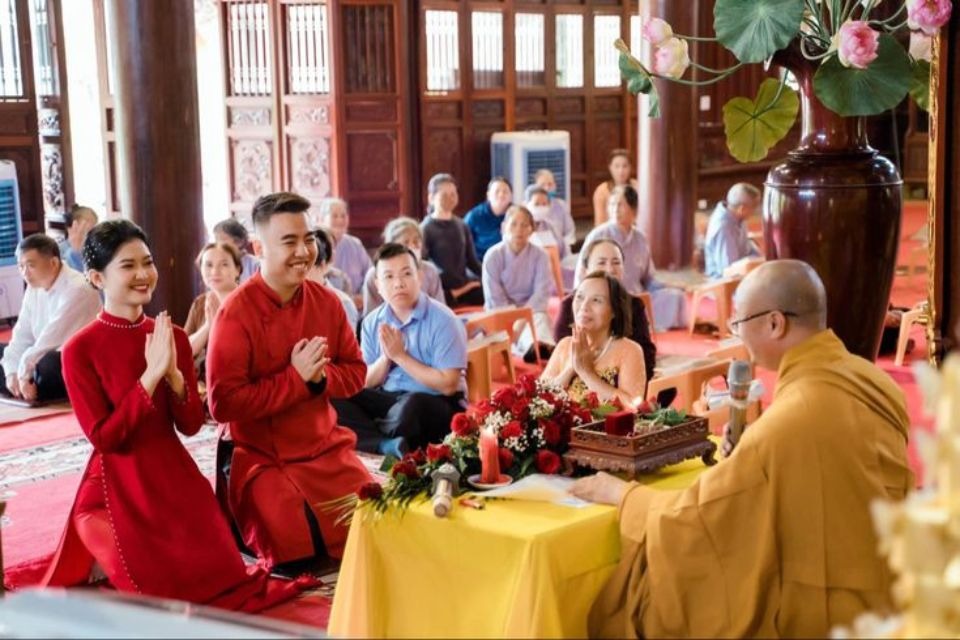
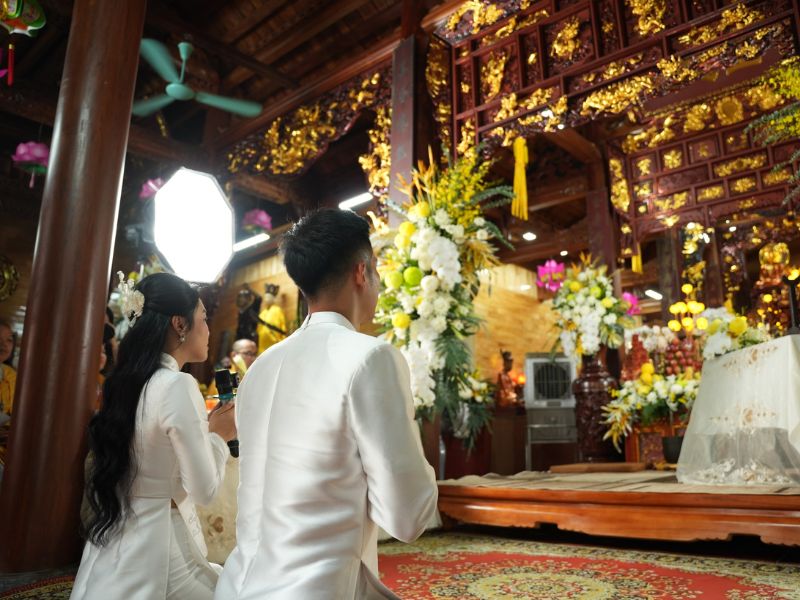
During a Hằng Thuận ceremony, the bride and groom make their vows in the presence of the Buddha, Buddhist monks and their loved ones.
The atmosphere is solemn yet intimate. Rather than focusing solely on the celebration of the wedding day, the ceremony invites the couple to pause and reflect on the life they are about to share.
They make a commitment to live together with patience and understanding, to care for one another, and to fulfil their responsibilities towards their parents, children and family.
For a Buddhist couple, this moment carries a particularly personal meaning. Their marriage is placed within a spiritual setting, where their promise to one another is accompanied by the teachings of compassion, ethical living and mindfulness.
It is, in many ways, a quiet promise of faith — a way for two people to reaffirm the belief that their marriage can be a path towards a more compassionate and meaningful life.
Marriage as a Shared Responsibility
Hằng Thuận places a gentle emphasis on the responsibilities that come with marriage.
The couple is encouraged to care for their parents and children, to respect one another, and to create a household where patience and understanding can grow.
Marriage is viewed as a shared journey. Each person has their own responsibilities, yet both are working towards the same home, the same family and the same sense of peace.
This idea remains deeply familiar within Vietnamese family culture, where marriage has traditionally connected two individuals with the wider generations around them.
Hằng Thuận and the Spiritual Heritage of Hue
Hue has a particularly meaningful place in the story of Hằng Thuận.
The ceremony held at Từ Đàm Pagoda in 1930 connected the tradition with one of the city's important Buddhist centres and helped establish a lasting association between Buddhist marriage and the cultural heritage of Hue.
Today, Hằng Thuận ceremonies continue to be held at Buddhist temples throughout Vietnam.
The rituals may vary from one temple to another, yet the heart of the ceremony remains simple: two people stand together, make their promises, and ask for the blessing and guidance to keep those promises throughout their life together.
A Promise That Continues Beyond the Wedding Day
A wedding lasts for a day. A marriage is lived through the years that follow.
This is where the spirit of Hằng Thuận becomes especially meaningful. The ceremony gives a couple a quiet moment to reaffirm why they have chosen to walk through life together — with respect, compassion, understanding and responsibility.
Before the Buddha, surrounded by family and loved ones, their promises take on a deeper sense of permanence.
Hằng Thuận is, at its heart, a quiet promise between two people: to remain beside one another, to treat each other with kindness, and to build a life together with faith, harmony and love.