
Huế’s New Coffee Obsession You Shouldn’t Miss

Huế’s Most Iconic Local Coffee
Have you tried Huế’s most iconic local coffee yet?
Huế is lucky to have its own signature drink loved deeply by locals — Salt Coffee (Cà Phê Muối). It may not be as internationally famous as Hanoi’s egg coffee, but many Vietnamese coffee lovers would argue it’s just as unforgettable.
At first sip, you’ll notice the contrast: bold, slightly bitter Vietnamese coffee balanced by a creamy salted foam. The result is rich, smooth, and surprisingly addictive.
Part of its unique character comes from Vietnam’s traditional roasting style. Coffee beans are often roasted with butter and sugar — and the secret touch is fish sauce — creating a deep, savory aroma and a subtle umami note.
This roasting method shines in Vietnam’s milk-based coffees, giving them their signature intensity and warmth. But in cleaner styles like Americano, Cold Brew, or Nitro, that same bold profile can feel a little weird.
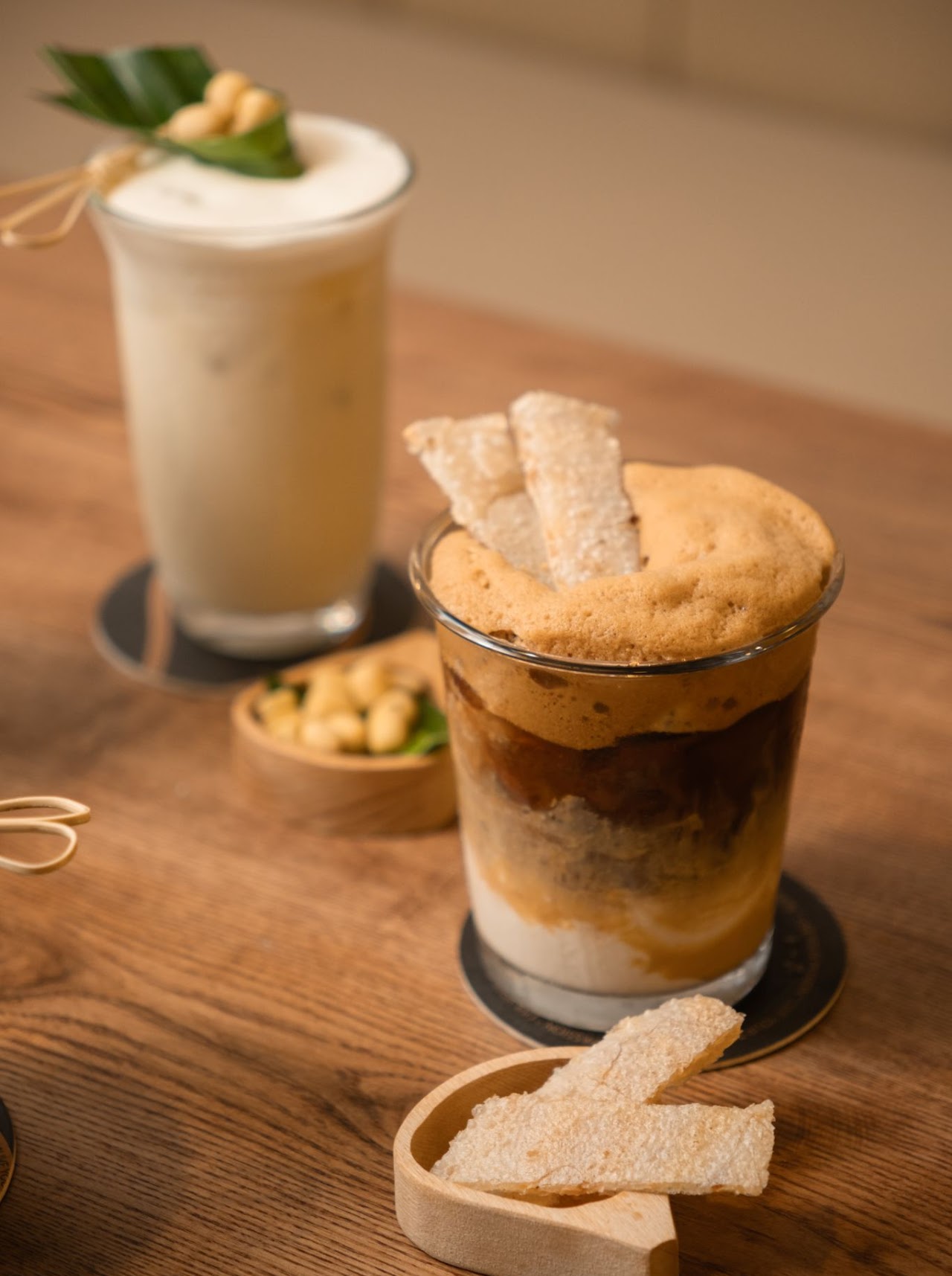
Image 1 : A cup of Me Xung Salted Coffe
But salt coffee alone is no longer the end of the story.
Recently, people in Huế have taken this beloved drink even further, creating something more signature — and even more traditional.
Starting from the base of salt coffee, they added one local specialty: mè xửng, a traditional peanut–malt–rice sweet long associated with Huế’s tea culture.
What Is Mè Xửng?
Mè xửng is made through a slow cooking process where rice flour is gently cooked until it becomes chewy and elastic, then mixed with crushed peanuts and malt syrup made from sprouted grains and glutinous rice. The sweetness comes naturally from this process rather than from added refined sugar. The candy is coated with sesame seeds and wrapped in thin rice paper, then lightly grilled so the sesame becomes fragrant while the rice paper turns crisp.
On its own, mè xửng can feel quite one-dimensional — mostly sweet — and eating too much of it alone can quickly become overwhelming. That’s why it has traditionally been enjoyed with tea, where bitterness helps balance the sweetness.
There are no definitive historical records documenting the exact origin of mè xửng. However, according to stories shared with the author by elderly residents who have lived in Huế for generations, this humble yet beloved confection is believed to have appeared in the early 20th century, during a period when migration and trade quietly shaped the culinary identity of the former imperial capital.
One commonly told explanation links the birth of mè xửng to waves of migrants from Quảng Ngãi who moved to Huế in search of work and new opportunities. These communities brought with them their renowned mạch nha — traditional malt syrup made from sprouted grains — a specialty long associated with Quảng Ngãi and still widely regarded today as producing some of Vietnam’s most fragrant and high-quality malt syrup. Although malt syrup itself is not an expensive ingredient, the labor required to produce it has always been extraordinarily demanding. Traditionally, artisans had to stir the mixture continuously and skim away foam for nearly eight hours before achieving the clear amber color that defines good mạch nha. Today, machinery has eased much of the workload, but in the past one can imagine craftsmen tending several boiling pots at once, stirring tirelessly for nearly an entire day — a physically exhausting process that speaks to the patience behind Vietnam’s traditional sweets.
Another culinary clue lies in the candy’s outer layer. The thin sheet of crisp rice paper wrapping mè xửng closely resembles bánh đập, a well-known specialty of Quảng Ngãi. Although both bánh đập and ordinary rice crackers (bánh đa) are made from rice flour, the difference lies in the choice and preparation of the rice itself. Bánh đập uses flour milled from carefully selected glutinous or semi-glutinous rice varieties, giving the finished sheet a gentle elasticity and a light, delicate crunch. In contrast, bánh đa is typically made from non-glutinous rice (gạo tẻ), which produces a firmer, harder texture and a more aggressive, brittle crispness. The softer, balanced crunch of bánh đập may have inspired confectioners to adapt this technique, combining it with malt syrup traditions to create the distinctive texture of mè xửng.
When Tradition Meets Coffee
And this gentle sweetness happens to pair beautifully with the bold bitterness of Hue's Salted coffee.
The coffee is finished with a light layer of sesame, slightly less condensed milk, and a touch of malt syrup that brings a gentle sweetness without a heavy aftertaste. A piece of mè xửng on top transforms the drink into something between a coffee and a dessert.
It becomes the perfect finale after a hearty breakfast — or an energizing afternoon dessert — whether following a bowl of phở or the iconic bún bò Huế, a coffee that feels both comforting and deeply local.
Image 2 : Me Xung in our Afternoon Tea Set
Discover a captivating journey through Hue Charm - The pillow was crafted by an artisan who was trusted by Emperor Bảo Đại to create bespoke pieces for the royal household
_converted.avif)


